
Joint Human–AI Systems: Programming
TDAI’s Joint Human–AI Systems theme explores how people and AI collaborate in real work—analysis, decision-support, and action—focusing on reliability, accountability, and human values. A series of featured talks explored some of the persistent tensions within this complex space.
2025-26 Speaker Series
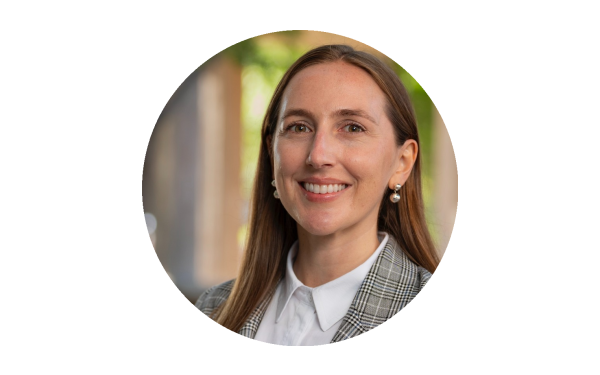

"Human–AI Collaboration: Performance, Uncertainty, and Human Preferences"
Mark Steyvers, University of California, Irvine
Tuesday, April 14, 2026
Mark’s talk started off by looking at the different structures that human-AI systems can take. In the simplest case, each one makes an independent decision / judgment and they are combined, which some might argue does not qualify as a joint system. In the first interaction case, the AI makes a recommendation, but the human makes the decision. In the final type, the human and AI form a fully collaborative system when they interact and communicate with one another.
His talk also discussed complementarity, although more from a “wisdom of the crowd” perspective—combining judgments from multiple decision makers. He emphasized that these systems work best when AI systems can communicate uncertainty in a way that aligns with human interpretations of confidence (e.g., using language familiar to human decision makers) and allow for mutual calibration (trust, reliability). He additionally covered real-time team tasks where humans have preference for AI teammates that not only perform well but also are engaged, cooperative, and fair.

"Humans, AI, and Robots in Disaster Management Decision Making"
Robin R. Murphy, Texas A&M University; Carnegie Mellon University
Friday, April 3, 2026
Dr. Murphy's talk focused on the real-world application of robots and AI in disaster response, addressing common misconceptions and practical challenges. Drawing from her experience with over 30 disasters, she noted that these high-pressure events often overwhelm local resources, complicating the use of technology.
A key takeaway was that robots are not replacements for humans; instead, they are specialized tools like drones and small robots designed for tasks humans cannot easily perform, such as sensing in inaccessible areas. For instance, during the Miami Surfside Condominium collapse, drones provided vital situational awareness through mapping and visualizations used across various teams.
Murphy emphasized that AI supports, rather than replaces, human decision-making. Her "data → information → decision" framework illustrates how AI can train decision-makers, improve tools, rapidly convert data into actionable information, and optimize data collection. The system she presented, which assesses hurricane damage using drones and AI, exemplifies this, reducing analysis time significantly when timely decisions are critical.
She highlighted that responders use aggregated AI outputs for neighborhood-level triage decisions, combining these insights with local expertise. Trust in opaque AI systems stems from their utility and ease of use rather than complete understanding.
Murphy concluded by discussing challenges such as feedback loops, data provenance, and legal risks, arguing that successful AI for disasters relies more on integration into human-centered systems than on sophisticated algorithms. In the Q&A session, she emphasized that the first 24 hours after an emergency are critical, as resources are scarce. She noted that while new technology (e.g., Starlink) is potentially helpful, the bandwidth still falls well short of emergency response needs in the first 24 hours.
2025-26 Speaker Series
"Human–AI Collaboration: Performance, Uncertainty, and Human Preferences"
Mark Steyvers, University of California, Irvine
Tuesday, April 14, 2026
Mark’s talk started off by looking at the different structures that human-AI systems can take. In the simplest case, each one makes an independent decision / judgment and they are combined, which some might argue does not qualify as a joint system. In the first interaction case, the AI makes a recommendation, but the human makes the decision. In the final type, the human and AI form a fully collaborative system when they interact and communicate with one another.
His talk also discussed complementarity, although more from a “wisdom of the crowd” perspective—combining judgments from multiple decision makers. He emphasized that these systems work best when AI systems can communicate uncertainty in a way that aligns with human interpretations of confidence (e.g., using language familiar to human decision makers) and allow for mutual calibration (trust, reliability). He additionally covered real-time team tasks where humans have preference for AI teammates that not only perform well but also are engaged, cooperative, and fair.
"Humans, AI, and Robots in Disaster Management Decision Making"
Robin R. Murphy, Texas A&M University; Carnegie Mellon University
Friday, April 3, 2026
Dr. Murphy's talk focused on the real-world application of robots and AI in disaster response, addressing common misconceptions and practical challenges. Drawing from her experience with over 30 disasters, she noted that these high-pressure events often overwhelm local resources, complicating the use of technology.
A key takeaway was that robots are not replacements for humans; instead, they are specialized tools like drones and small robots designed for tasks humans cannot easily perform, such as sensing in inaccessible areas. For instance, during the Miami Surfside Condominium collapse, drones provided vital situational awareness through mapping and visualizations used across various teams.
Murphy emphasized that AI supports, rather than replaces, human decision-making. Her "data → information → decision" framework illustrates how AI can train decision-makers, improve tools, rapidly convert data into actionable information, and optimize data collection. The system she presented, which assesses hurricane damage using drones and AI, exemplifies this, reducing analysis time significantly when timely decisions are critical.
She highlighted that responders use aggregated AI outputs for neighborhood-level triage decisions, combining these insights with local expertise. Trust in opaque AI systems stems from their utility and ease of use rather than complete understanding.
Murphy concluded by discussing challenges such as feedback loops, data provenance, and legal risks, arguing that successful AI for disasters relies more on integration into human-centered systems than on sophisticated algorithms. In the Q&A session, she emphasized that the first 24 hours after an emergency are critical, as resources are scarce. She noted that while new technology (e.g., Starlink) is potentially helpful, the bandwidth still falls well short of emergency response needs in the first 24 hours.
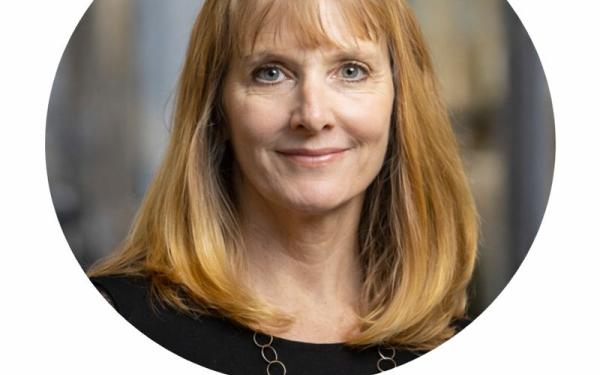
"The Future of Human Factors and AI Innovation"
Missy Cummings, George Mason University
with Joe Lyons, Air Force Research Lab; Ayaz Hyder, Smart Columbus; Arnab Nandi, OSU
March 3, 2026
We had a ... shall we say spicy? ... keynote talk and panel as our contribution to the AI Research Summit co-hosted by the Translational Data Analytics Institute and the AI(x) Hub. Dr. Missy Cummings, currently a professor at George Mason University and most recently a Safety Advisor to the National Highway Traffic Safety Administration (NHTSA), kicked it off in her keynote by laying out how the early celebrated successes of the current round of inductive AI are “whitewashing” the real harm, measured in dollars and human lives, and how these harms are symptoms building technologies intended to replace people instead of work with and support them. One example given was the prioritization of features that boost AI performance but make the technologies harder to work with, hobbling people’s ability to contribute to critical activities. The panel mostly tempered this view, highlighting settings where AI can perform in ways (and at levels) that humans do not and perhaps cannot. Ultimately, the collegial discourse made it clear that there is still a wide gap of understanding, mindset, and beliefs between disciplines most closely connected with building and innovating AI technologies and those tasked with integrating them into work systems, especially safety-critical work systems.
"AI, Authors, and Markets: Human-Centered Evidence for Copyright and Creative Labor"
Tuhin Chakrabarty (Stony Brook University)
Friday, February 27, 2026
Dr. Tuhin Chakrabarty took a strong stance that AI cannot be creative but can only copy creative humans based on their often-copyrighted content. He discussed two studies focused on creative writing using LLMs. In the first, they tested if expert creatives (MFA students) prefer a famous (human) author’s writing or an AI’s writing that aimed to copy the human’s style. They found that even if the model is finetuned on as little as a few pages of human author writing, creative writing students ended up preferring AI-generated context over the original author. This raises interesting questions about (1) fair use of human authors’ copyrighted content, and (2) the sale of AI-generated content and the market harm it may cause.
In the second part of his talk, Tuhin discussed case studies of authors on Kindle selling AI-generated books that receive high ratings, with one author writing over 600 books in a year and starting a business on AI ghostwriting, teaching other aspiring authors to use AI. Tuhin overall was strongly opposed to and critical of AI use in creative writing.
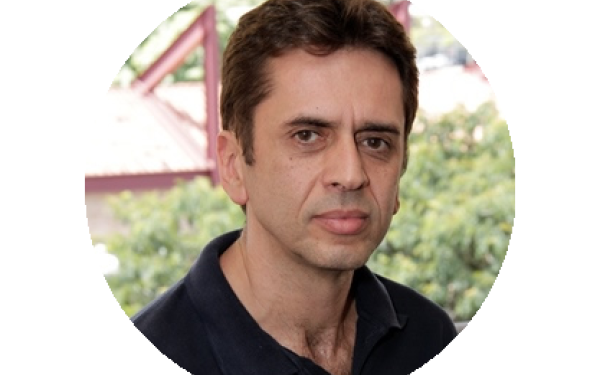
"Human-Centered AI for Health and Responsible AI"
Wagner Meira Jr., Universidade Federal de Minas Gerais, Brazil
Friday, January 30, 2026
Dr. Wagner Meira's talk discussed the development of a large, deployed, human-centered AI system in tele-healthcare, focusing on ECG-based diagnosis. He emphasized that while AI has advanced technically, its successful application requires integrating ethics and human values alongside accuracy. He pointed out that in Brazil, large-scale tele-health initiatives have improved outcomes by analyzing millions of ECGs, yet diagnosing ECGs remains challenging due to its complex classification issues, with even expert agreement only at around 80%.
Wagner presented various AI strategies that highlight advancements in healthcare technology. One key approach involves Deep Convolutional Neural Networks (CNNs) that outperform cardiologists in certain diagnostics. He also discussed hybrid CNN–Transformer models and local-global attention mechanisms, which enhance the analysis of complex medical data by incorporating medical knowledge. Additionally, Wagner emphasizes multimodal learning, integrating ECG signals with textual data to improve diagnostic accuracy. He noted that achieving high accuracy is not enough; AI in healthcare must prioritize fairness, transparency, and accountability. Meira outlines essential practices to avoid bias, build trust through explainability, ensure human oversight, and maintain robustness in the face of real-world clinical challenges.
Wagner noted that data limitations and biases complicate governance, and he advocates better sampling and model representations to improve trustworthiness. He concluded that AI systems must incorporate human values and perspectives from the outset to be effective in healthcare, and that responsible AI is a multidisciplinary effort. Finally, he observed that in human-AI joint systems – the level at which humans engage is changing.
One key takeaway from the Q&A session was a comment attributed to a cardiologist who emphasized that, ultimately, doctors prioritize saving lives above all else; concerns such as fairness, transparency, and accountability, while important, are secondary. He also highlighted an important statistic showing that the telehealth system they developed has already made a remarkable impact on saving lives.
"The Future of Human Factors and AI Innovation"
Missy Cummings, George Mason University
with Joe Lyons, Air Force Research Lab; Ayaz Hyder, Smart Columbus; Arnab Nandi, OSU
March 3, 2026
We had a ... shall we say spicy? ... keynote talk and panel as our contribution to the AI Research Summit co-hosted by the Translational Data Analytics Institute and the AI(x) Hub. Dr. Missy Cummings, currently a professor at George Mason University and most recently a Safety Advisor to the National Highway Traffic Safety Administration (NHTSA), kicked it off in her keynote by laying out how the early celebrated successes of the current round of inductive AI are “whitewashing” the real harm, measured in dollars and human lives, and how these harms are symptoms building technologies intended to replace people instead of work with and support them. One example given was the prioritization of features that boost AI performance but make the technologies harder to work with, hobbling people’s ability to contribute to critical activities. The panel mostly tempered this view, highlighting settings where AI can perform in ways (and at levels) that humans do not and perhaps cannot. Ultimately, the collegial discourse made it clear that there is still a wide gap of understanding, mindset, and beliefs between disciplines most closely connected with building and innovating AI technologies and those tasked with integrating them into work systems, especially safety-critical work systems.
"AI, Authors, and Markets: Human-Centered Evidence for Copyright and Creative Labor"
Tuhin Chakrabarty (Stony Brook University)
Friday, February 27, 2026
Dr. Tuhin Chakrabarty took a strong stance that AI cannot be creative but can only copy creative humans based on their often-copyrighted content. He discussed two studies focused on creative writing using LLMs. In the first, they tested if expert creatives (MFA students) prefer a famous (human) author’s writing or an AI’s writing that aimed to copy the human’s style. They found that even if the model is finetuned on as little as a few pages of human author writing, creative writing students ended up preferring AI-generated context over the original author. This raises interesting questions about (1) fair use of human authors’ copyrighted content, and (2) the sale of AI-generated content and the market harm it may cause.
In the second part of his talk, Tuhin discussed case studies of authors on Kindle selling AI-generated books that receive high ratings, with one author writing over 600 books in a year and starting a business on AI ghostwriting, teaching other aspiring authors to use AI. Tuhin overall was strongly opposed to and critical of AI use in creative writing.
"Human-Centered AI for Health and Responsible AI"
Wagner Meira Jr., Universidade Federal de Minas Gerais, Brazil
Friday, January 30, 2026
Dr. Wagner Meira's talk discussed the development of a large, deployed, human-centered AI system in tele-healthcare, focusing on ECG-based diagnosis. He emphasized that while AI has advanced technically, its successful application requires integrating ethics and human values alongside accuracy. He pointed out that in Brazil, large-scale tele-health initiatives have improved outcomes by analyzing millions of ECGs, yet diagnosing ECGs remains challenging due to its complex classification issues, with even expert agreement only at around 80%.
Wagner presented various AI strategies that highlight advancements in healthcare technology. One key approach involves Deep Convolutional Neural Networks (CNNs) that outperform cardiologists in certain diagnostics. He also discussed hybrid CNN–Transformer models and local-global attention mechanisms, which enhance the analysis of complex medical data by incorporating medical knowledge. Additionally, Wagner emphasizes multimodal learning, integrating ECG signals with textual data to improve diagnostic accuracy. He noted that achieving high accuracy is not enough; AI in healthcare must prioritize fairness, transparency, and accountability. Meira outlines essential practices to avoid bias, build trust through explainability, ensure human oversight, and maintain robustness in the face of real-world clinical challenges.
Wagner noted that data limitations and biases complicate governance, and he advocates better sampling and model representations to improve trustworthiness. He concluded that AI systems must incorporate human values and perspectives from the outset to be effective in healthcare, and that responsible AI is a multidisciplinary effort. Finally, he observed that in human-AI joint systems – the level at which humans engage is changing.
One key takeaway from the Q&A session was a comment attributed to a cardiologist who emphasized that, ultimately, doctors prioritize saving lives above all else; concerns such as fairness, transparency, and accountability, while important, are secondary. He also highlighted an important statistic showing that the telehealth system they developed has already made a remarkable impact on saving lives.
"Cognitive AI and Human–Machine Teaming"
Cleotilde (Coty) Gonzalez, Carnegie Mellon University
Thursday, November 20, 2025
Dr. Cleotilde “Coty” Gonzalez’s talk focused on the idea of complementarity in human-machine interaction – the idea that the judgment made by a hybrid team can exceed the performance of an individual AI or human. While complementarity is a key goal of human-AI systems, the circumstances necessary for producing complementarity are quite rare, and tend only to occur when humans can outperform the AI partner. Coty presented the idea of Cognitive AI, which serves as a mental model that the AI can use to simulate what a human might do. She uses instance-based learning as a simple model of sequential decision-making tasks, focusing on stopping thresholds. She gave examples in phishing detection and cyber defense with cases that illustrate how Cognitive AI / IBL partners can improve on random / non-model-based AI performance. For future direction, she focused on the need for better understanding of where complementarity is possible (where humans can be better than AI), evaluation metrics, and diverse paradigms that allow for experimental manipulation of team and task characteristics.
"AI-Assisted Writing, Detection, and Authorship"
Mohit Iyyer, University of Massachusetts, Amherst
Tuesday, November 18, 2025
Dr. Mohit Iyyer’s talk discussed the proliferation of human-AI collaborative writing on the web and how the boundaries between what is human and what is AI-written are starting to get blurred over time. He started with examples of news snippets and political commentaries asking the audience to assess whether they were AI- or human-written. Most people guessed wrong, mirroring findings from the study that was discussed, where only heavy users of AI were able to detect if something was AI-generated, and most public could not. He then provided evidence that most local newspapers use AI heavily in writing their articles. He argued that this is not a bad thing, as most of these articles were templated structures to begin with.
Most of the rest of his talk focused on building better tools to detect AI-generated content, treating it as spectrum: AI-generated, lightly-AI-edited, heavily-AI-edited, and so on. He showcased a tool called Editlens that has been productionized by Pangram Labs.
Toward the end, Mohit drew lots of connections between creativity and memorization in LLMs, prompting a lively discussion from the audience on whether or not AI can be creative, and the extent to which humans should use AI-generated content.
"Cognitive AI and Human–Machine Teaming"
Cleotilde (Coty) Gonzalez, Carnegie Mellon University
Thursday, November 20, 2025
Dr. Cleotilde “Coty” Gonzalez’s talk focused on the idea of complementarity in human-machine interaction – the idea that the judgment made by a hybrid team can exceed the performance of an individual AI or human. While complementarity is a key goal of human-AI systems, the circumstances necessary for producing complementarity are quite rare, and tend only to occur when humans can outperform the AI partner. Coty presented the idea of Cognitive AI, which serves as a mental model that the AI can use to simulate what a human might do. She uses instance-based learning as a simple model of sequential decision-making tasks, focusing on stopping thresholds. She gave examples in phishing detection and cyber defense with cases that illustrate how Cognitive AI / IBL partners can improve on random / non-model-based AI performance. For future direction, she focused on the need for better understanding of where complementarity is possible (where humans can be better than AI), evaluation metrics, and diverse paradigms that allow for experimental manipulation of team and task characteristics.
"AI-Assisted Writing, Detection, and Authorship"
Mohit Iyyer, University of Massachusetts, Amherst
Tuesday, November 18, 2025
Dr. Mohit Iyyer’s talk discussed the proliferation of human-AI collaborative writing on the web and how the boundaries between what is human and what is AI-written are starting to get blurred over time. He started with examples of news snippets and political commentaries asking the audience to assess whether they were AI- or human-written. Most people guessed wrong, mirroring findings from the study that was discussed, where only heavy users of AI were able to detect if something was AI-generated, and most public could not. He then provided evidence that most local newspapers use AI heavily in writing their articles. He argued that this is not a bad thing, as most of these articles were templated structures to begin with.
Most of the rest of his talk focused on building better tools to detect AI-generated content, treating it as spectrum: AI-generated, lightly-AI-edited, heavily-AI-edited, and so on. He showcased a tool called Editlens that has been productionized by Pangram Labs.
Toward the end, Mohit drew lots of connections between creativity and memorization in LLMs, prompting a lively discussion from the audience on whether or not AI can be creative, and the extent to which humans should use AI-generated content.
Stay Involved
- Interested in participating, collaborating, or proposing programming? Contact: rayo.3@osu.edu
- To receive updates on events, workshops, and opportunities in this theme, join the TDAI mailing list:
https://mailchi.mp/osu/oyxkgsy36d