TDAI launches yearlong theme on data, models and zoonotic disease


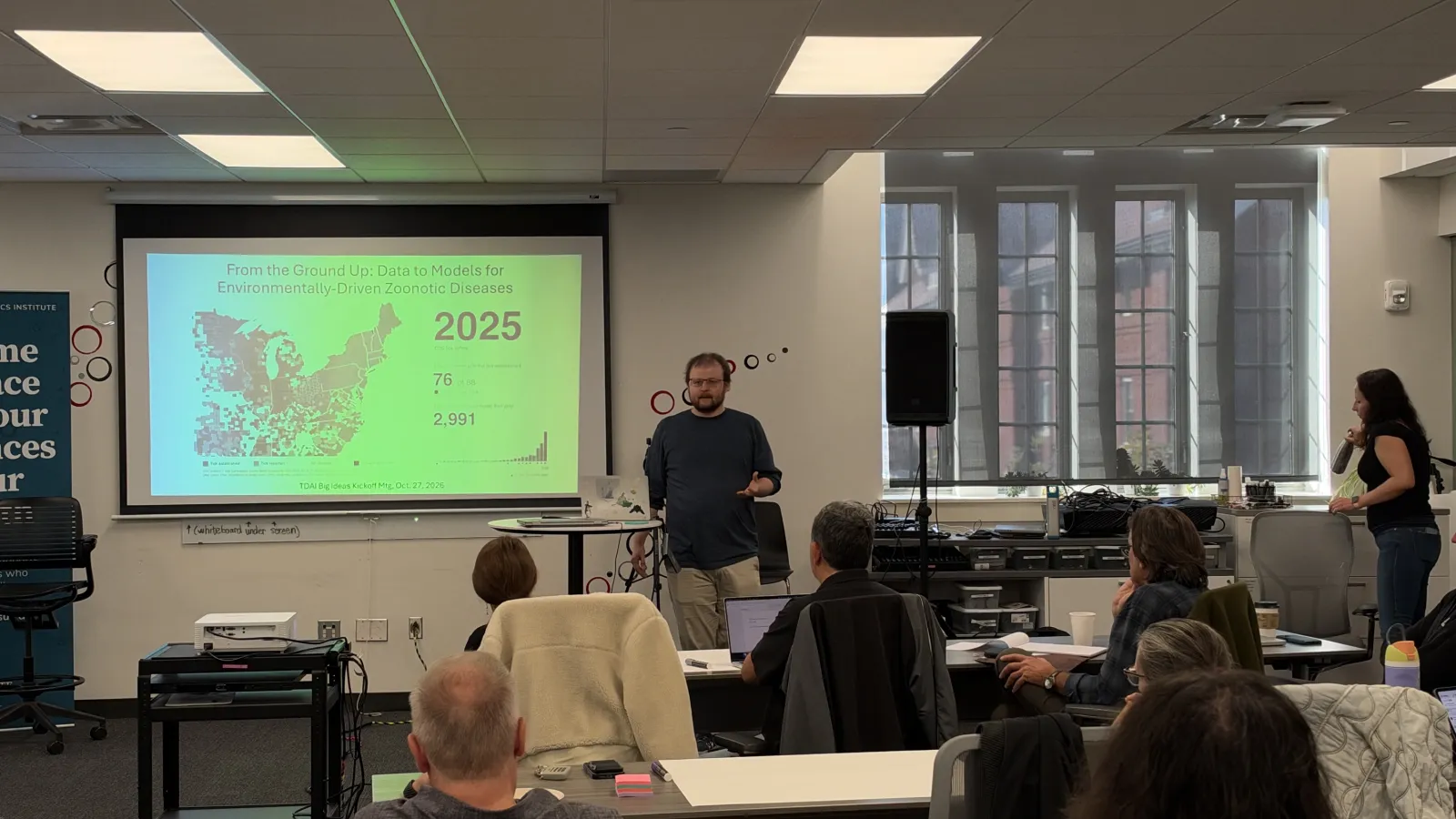
The Translational Data Analytics Institute (TDAI) launched its new yearlong theme, “From the Ground Up: Data to Models for Environmentally-Driven Zoonotic Diseases,” with a kickoff event on October 27 in Pomerene Hall.
The event brought together 28 attendees to explore how environmental change, human behavior and other factors influence the spread of diseases between animals and people. The theme is led by Andrew Perrault, assistant professor of computer science and engineering, and Daniela Miteva, associate professor in the Department of Agricultural, Environmental, and Development Economics.
Zoonotic diseases are shaped by interactions among people, animals, pathogens and their environments. Changes in land use, wildlife populations and climate can affect where disease-carrying ticks and mosquitoes live and how people encounter them.
The kickoff highlighted the spread of blacklegged ticks as an example of why these connections matter. Changes in deer populations and forests have helped reshape tick habitats over time, while climate influences where ticks can become established. The presentation also emphasized the value of surveillance: searching for ticks can provide an earlier indication of their spread than waiting for human cases to rise.
The theme aims to bring researchers from across disciplines together to identify gaps in available data and develop models that account for environmental, social and behavioral factors. The goal is to support research that can inform disease prevention and policy.
The kickoff also introduced perspectives spanning veterinary medicine, public health, anthropology, environmental economics, community dynamics and infectious disease research. Attendees were invited to identify research and data gaps and share their interests and potential contributions.
Building on Ohio State’s Human-Environment Modeling and Learning (HELM) initiative and a recent PRE Catalyst grant, the theme plans to host monthly seminars and workshops, develop research proposals and convene an Ohio State–Korea University conference on January 25–26, 2027.